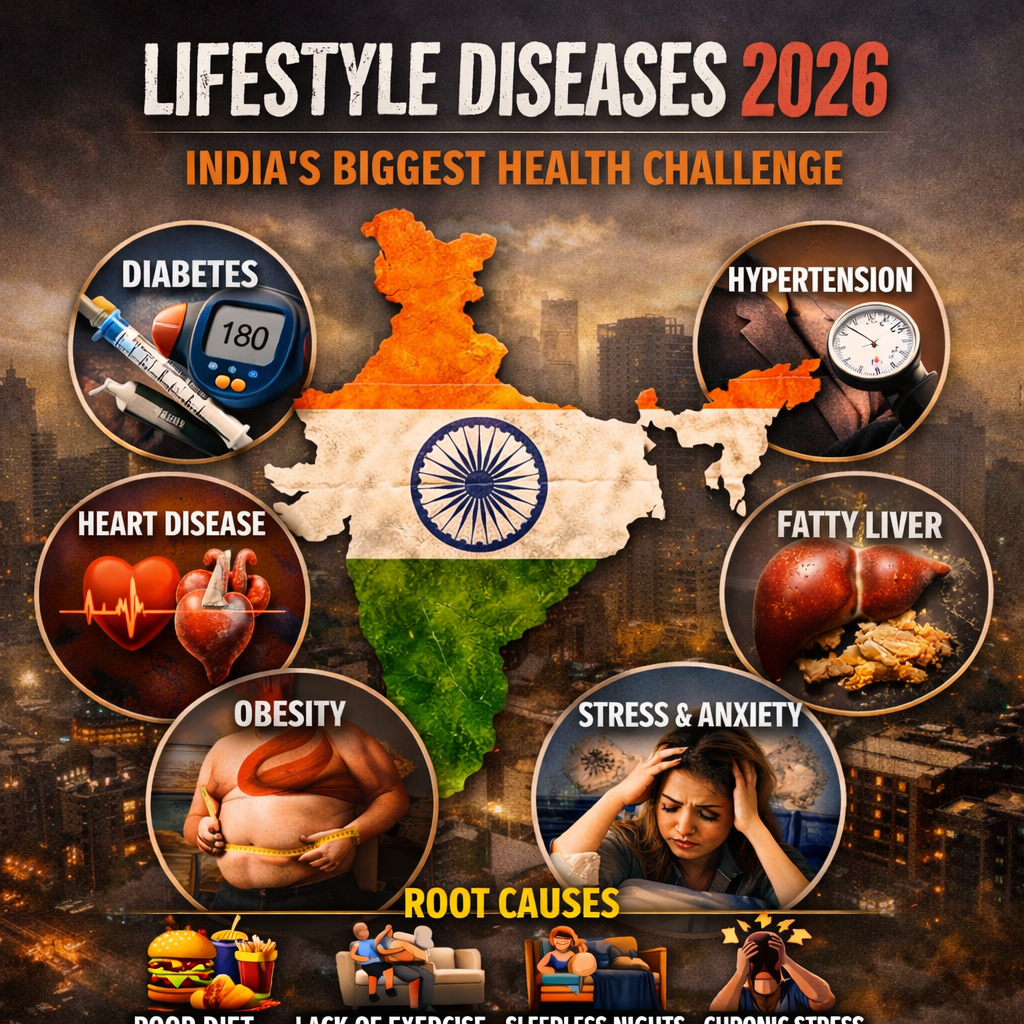
Shocking Lifestyle Diseases 2026
Table of Contents
10 Shocking Lifestyle Diseases 2026: India’s Biggest Health Challenge & Practical Solutions
Lifestyle Diseases 2026 are no longer just a projection. They are a present reality across India.
From metro cities to small towns, rising cases of diabetes, heart disease, hypertension, obesity, and fatty liver reflect a major shift in how we live. Longer work hours, processed food, digital overload, and chronic stress are quietly reshaping public health.
This is not just a medical issue. It is a lifestyle pattern that demands correction.
Let’s understand the problem clearly — and then look at practical solutions.
What Are Lifestyle Diseases?
Lifestyle diseases are conditions that develop primarily due to daily habits rather than infections.
They progress slowly over time and are strongly linked to:
- Sedentary behavior
- Unhealthy diet
- Smoking and alcohol use
- Chronic stress
- Sleep deprivation
Unlike infectious diseases, most lifestyle diseases are largely preventable.
Why 2026 Is a Critical Health Turning Point for India
India is experiencing rapid urbanization, career pressure, and technology-driven routines. While economic growth has improved convenience, it has also reduced daily movement and increased dependence on processed foods.
Younger adults in their 30s and 40s are now being diagnosed with conditions once common after 60.
This shift highlights one truth: modern habits are accelerating disease risk earlier than ever before.
The Most Common Lifestyle Diseases in India (2026)
1. Type 2 Diabetes
India has one of the highest numbers of people living with diabetes globally.
High intake of refined carbohydrates, sugary beverages, and low physical activity contribute to rising blood sugar levels. Over time, uncontrolled diabetes increases the risk of nerve damage, kidney disease, and heart complications.
2. Cardiovascular Disease
Heart disease remains one of the leading causes of death in India.
High cholesterol, smoking, obesity, unmanaged stress, and high blood pressure significantly increase risk. Many cases develop silently for years before symptoms appear.
3. Hypertension (High Blood Pressure)
Often called the silent killer, hypertension may show no early warning signs.
Excess salt intake, weight gain, stress, and inactivity are common triggers. If left unmanaged, it increases the risk of stroke and heart attack.
4. Obesity
Obesity is not just about weight — it is about excess body fat that disrupts metabolism.
It raises the risk of diabetes, joint problems, heart disease, and fatty liver. Sedentary lifestyles and high-calorie diets are the primary contributors.
5. Non-Alcoholic Fatty Liver Disease
Fat accumulation in the liver is increasingly common due to poor diet and insulin resistance. Many people remain unaware until advanced stages.
6. Mental Health DisordersChronic stress, burnout, and digital overload contribute to rising cases of anxiety and depression.
Mental health is deeply connected to physical health. Prolonged stress elevates cortisol, which affects metabolism and fat storage.
Root Causes Behind India’s Lifestyle Disease Crisis
The rise of Lifestyle Diseases 2026 is not accidental. It stems from daily behavior patterns.
1. Sedentary Work Culture
Long sitting hours reduce calorie expenditure and slow metabolism. Desk jobs with minimal movement have become the norm.
2. Ultra-Processed Diets
Packaged snacks, sugary drinks, and deep-fried foods are convenient but calorie-dense and nutrient-poor.
3. Poor Sleep Patterns
Late-night screen exposure disrupts hormonal balance, increasing hunger and reducing recovery.
4. Chronic Stress
Work pressure, financial responsibilities, and lack of downtime elevate stress hormones, affecting heart health and fat storage.
How To Solve Lifestyle Diseases With Lifestyle Correction
The solution is not extreme dieting or intense gym routines. It is consistent lifestyle correction.
1. Move Daily
Aim for at least 30–45 minutes of moderate physical activity.
Brisk walking, cycling, yoga, or strength training significantly reduce disease risk. Even standing breaks every hour improve circulation and metabolic function.
2. Build Muscle to Protect MetabolismStrength training improves insulin sensitivity and supports bone density.
Two to three sessions per week can:
- Improve blood sugar regulation
- Enhance posture and joint stability
- Support long-term metabolic health
Muscle mass naturally declines with age, so preserving it is essential.
3. Eat Whole, Balanced Meals
Focus on nutrient-dense foods instead of calorie counting.
Build meals around:
- Quality protein
- Vegetables
- Whole grains
- Healthy fats
Reduce refined sugar and processed foods gradually. Sustainable changes work better than strict diets.
4. Improve Sleep Quality
Protect 7–8 hours of consistent sleep.
Sleep supports hormone balance, appetite control, and recovery. Avoid screens late at night and maintain a regular bedtime schedule.
5. Manage Stress Intentionally
Stress management is not optional anymore.
Daily practices such as:
- Deep breathing
- Evening walks
- Journaling
- Limiting social media
help regulate stress hormones and improve mental clarity.
If balancing responsibilities feels overwhelming, structured planning tools like this work-life balance planner can help reduce mental overload and improve time management.
6. Schedule Preventive Health Checkups
Early detection reduces long-term complications.
Regular monitoring of:
- Blood sugar
- Blood pressure
- Lipid profile
- Liver function
helps identify risks before they become serious.
A Cultural Shift Is Needed
Lifestyle Diseases 2026 represent more than statistics. They reflect how modern life is structured.
Long work hours, convenience food culture, digital addiction, and constant stress all contribute to rising health risks.
Solving this crisis requires both individual responsibility and broader awareness about preventive health.
Conclusion
Lifestyle diseases are India’s biggest health challenge today — but they are largely preventable.
Small daily corrections create powerful long-term protection. Move more. Eat smarter. Sleep better. Build muscle. Manage stress. Monitor your health. Prevention is not dramatic. It is consistent. And the best time to begin is now.