
Your Step-by-Step Guide to Navigating a Mid-Life Transition into Aviation
Table of Contents
Career Change to Pilot; Have you ever looked out of an office window at a plane trailing across the sky and wondered if you missed your chance? For many professionals, the dream of flying was grounded years ago by student loans, family obligations, or the perceived safety of a corporate ladder. However, in 2026, the landscape has shifted. A global pilot shortage combined with modernized training pathways has made a career change to pilot not only possible but a strategic move for those seeking a high-stakes, high-reward lifestyle.
Whether you are in your late 20s, 30s, or even 40s, the cockpit is no longer reserved for those who started at eighteen. Transitioning to aviation as an adult brings a unique set of advantages, including professional maturity and disciplined financial planning. But how do you go from a 9-to-5 desk job to 35,000 feet?
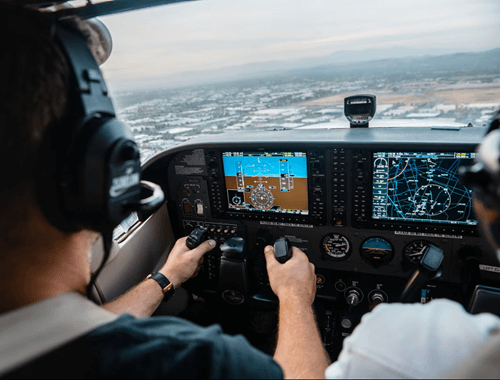
How to Become a Pilot: Career Change Basics
The first hurdle in a career change to pilot is understanding that “pilot” is a broad term. Most career changers aim for the role of a Commercial Pilot, which allows you to be paid for your flying services.
What are the Prerequisites?
Before you quit your current job, you must ensure you meet the baseline requirements:
- Educational Background: You generally need a high school diploma with a focus on Physics and Mathematics. If your degree is in an unrelated field, most flight schools only require proof of these foundational subjects at the 10+2 level.
- Medical Fitness: This is the “ultimate” prerequisite. You must pass a Class 1 Medical Examination (or your local equivalent, like DGCA in India). This tests your vision, hearing, cardiovascular health, and overall physical stamina.
- Age Limits: While you can earn a Private Pilot License (PPL) at any age, most commercial airlines have a mandatory retirement age of 65. If you are starting at 40, you still have a 25-year career ahead of you—longer than many people spend in their first “traditional” career.
How to Career Change as a Pilot: The Three Main Paths
When you are learning how to career change as a pilot, you will find that the training structure differs significantly from a university degree. You have three primary routes to choose from:
1. Integrated Flight Training
This is a full-time, “fast-track” program that takes you from zero experience to a Commercial Pilot License (CPL) in roughly 18 to 24 months. It is intensive and requires total immersion, meaning you likely cannot work another job during this time.
2. Modular Flight Training
The modular route is often the preferred choice for career changers who cannot afford to lose their current income immediately. You take the training in “modules”—PPL first, then night ratings, instrument ratings, and finally the CPL. This allows you to “pay as you go” and train on weekends or during vacations.
3. Airline Cadet Programs
Many major carriers, such as Delta, American Airlines, or IndiGo, offer “Cadet Programs.” These are highly competitive but offer a direct pipeline to a job. Some airlines even provide financing or conditional employment contracts before you begin training. For those interested in the technical and strategic side of navigating such complex corporate structures, resources like Ansh Shrivastava’s website offer insights into high-level professional growth and technical problem-solving.
The Reality of the Transition: Costs and Timelines
A career change to become a pilot is a significant investment. In 2026, the cost of obtaining a CPL can range from $70,000 to $100,000 (roughly ₹45–₹60 Lakhs in India), depending on the flight school and location.
| Phase | Estimated Duration | Focus Area |
| Ground School | 3–6 Months | Navigation, Meteorology, Air Law |
| Flight Hours Building | 10–15 Months | Logging 200+ hours of flight time |
| Advanced Ratings | 2–4 Months | Multi-engine and Instrument training |
| Type Rating | 2 Months | Training for specific aircraft (e.g., A320) |
Why Now is the Best Time for a Career Change to Pilot
If you are questioning why cosmetology is a good career choice for some but “pilot” is the choice for you, look at the 2026 market data.
- The Retirement Wave: Over 30% of current airline pilots are between the ages of 50 and 64. As they retire, the demand for new First Officers is skyrocketing.
- Increased Compensation: Entry-level salaries for regional pilots have jumped significantly. In the U.S., a first-year First Officer can now expect to earn between $90,000 and $110,000, while senior captains at major carriers often exceed $350,000.
- Transferable Skills: Professionals from engineering, management, or medicine often find that their “soft skills”—decision-making under pressure, communication, and checklist discipline—make them superior students in the cockpit.
Overcoming the “Age” Fear
The most common question from career changers is: “Am I too old?” The answer is almost always no. Flight schools reported in 2025 that the average age of a career-changing student is 39. Airlines value the maturity and life experience that older candidates bring to the flight deck. While your “learning curve” for motor skills might be slightly steeper than a 19-year-old’s, your ability to manage complex systems and remain calm during emergencies is a massive asset.
Conclusion
Making a career change to pilot is not a decision to be taken lightly. It requires significant financial capital, a return to “student mode,” and a tolerance for a non-traditional lifestyle involving nights away from home and irregular schedules. However, for those who feel the pull of the horizon, the rewards are unmatched. You aren’t just changing a job title; you are gaining a panoramic view of the world and a level of professional autonomy that few other careers can provide.
Frequently Asked Questions
Can I become a pilot if I wear glasses?
Yes. As long as your vision is correctable to 20/20 with glasses or contact lenses and you do not have significant color blindness, you can typically pass the Class 1 Medical Exam.
How much does a pilot make in their first year?
For career changers starting at regional airlines in 2026, first-year compensation usually falls between $70,000 and $95,000, often including signing bonuses to attract talent.
Do I need a college degree to fly for a major airline?
While many “legacy” carriers previously required a 4-year degree, many have softened this requirement in 2026 due to the pilot shortage, prioritizing flight hours and experience over a specific diploma.
How long does it take to go from “zero” to an airline job?
On a full-time, integrated path, you can be eligible for an airline interview in approximately 18 to 24 months.
What is the hardest part of the flight training?
Most students find the “Ground School” exams (specifically Navigation and Meteorology) to be the most challenging part, as they require memorizing a vast amount of technical data and regulations.